The Largest Insurance Companies in the US: A Guide to Industry Titans Shaping the Economy

Have you ever wondered what powerhouses lie behind the insurance policies that secure your future? Welcome to the world of the largest insurance companies in the US, where billion-dollar revenues and decades of history intertwine to safeguard the lives, health, and assets of millions. These giants not only dominate the industry but also play a significant role in the nation’s economic landscape.
Join us as we delve into the stories of these leading insurers. Discover how their innovative spirit and unwavering commitment to policyholders have propelled them to the pinnacle of success. Through a detailed exploration of their financial performance, product offerings, and technological advancements, you will gain insight into what makes these companies leaders in their field.
Overview of the Largest Insurance Companies in the US
In the vast landscape of the US insurance industry, a few giants stand out, shaping the market and influencing the economy. These top players, renowned for their financial prowess, have established themselves through years of strategic growth and customer trust.
Delving into their histories provides insight into how they attained such monumental success. The following analysis highlights the top five insurance companies in the US, shedding light on their foundations, economic impact, and the criteria used to rank them.
Top 5 Insurance Companies by Revenue
The ranking of insurance companies often hinges on revenue generation, market share, and industry influence. Here’s a look at the top five:
- State Farm – Founded in 1922, this titan was initially focused on auto insurance for farmers. State Farm grew through innovation and acquisition, becoming a household name in property and casualty insurance.
- Berkshire Hathaway – Known for its robust financial backing under Warren Buffet, it has diversified its insurance offerings extensively since its initial establishment in 1839.
- Progressive Corporation – Starting in 1937, Progressive revolutionized the industry with a focus on auto insurance, later expanding to home and more, guided by a customer-centric approach.
- Allstate – With its origins in 1931, Allstate became synonymous with personal lines of insurance, growing through strategic marketing and innovation.
- Liberty Mutual – Founded in 1912, it started by providing workers’ compensation and expanded into a vast array of insurance services globally.
Criteria for Determining the Largest Companies
The scale and influence of an insurance company can be measured through several criteria. Here’s what typically defines their stature:
- Revenue – The total income generated from premiums and investments.
- Market Share – The percentage of total industry sales they command.
- Customer Base – The number of policyholders and geographical reach.
- Asset Management – The ability to manage and grow financial resources.
Economic Impact of Insurance Giants
The influence of these companies on the US economy is profound. They not only provide financial security to millions but also contribute significantly to economic stability and employment. As illustrated in the table below, their economic footprint is immense:
| Company | Annual Revenue (in billions) | Employees | Market Share (%) |
|---|---|---|---|
| State Farm | $79.4 | 58,000 | 10.1 |
| Berkshire Hathaway | $47.0 | 360,000 | 9.8 |
| Progressive Corporation | $42.7 | 43,000 | 8.8 |
| Allstate | $39.8 | 45,780 | 8.3 |
| Liberty Mutual | $36.9 | 45,000 | 7.7 |
The resilience and adaptability of these companies not only define their market dominance but also their pivotal role in stabilizing the financial ecosystem of the nation.
Financial Performance and Market Share
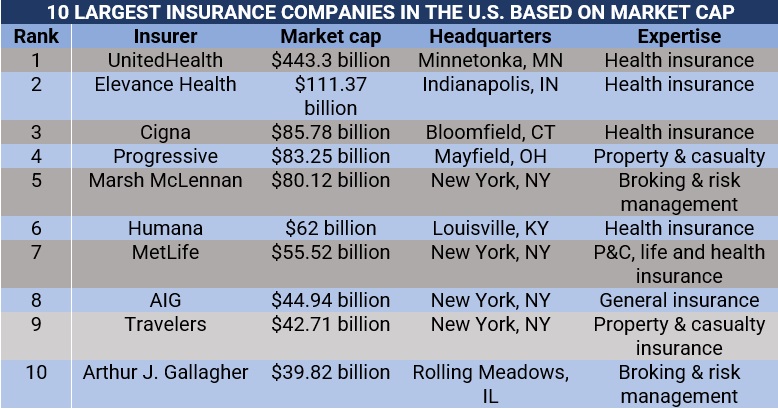
Dive into the financial prowess and market presence of the largest insurance companies in the United States, where numbers tell the tale of success and dominance.
The insurance industry is not just about providing a safety net; it’s a financial powerhouse that operates on billions of dollars in revenue and profit. Understanding the financial health and market share of these giants can give insight into their sustained growth and influence.
Annual Revenue and Profit Metrics
Top insurance companies boast impressive figures in their financial statements, showcasing their ability to generate substantial income and profit. These metrics are crucial for stakeholders and analysts aiming to gauge the firms’ market positions.
| Company | Annual Revenue (in billion USD) | Profit Margin (%) | Growth Rate (%) |
|---|---|---|---|
| State Farm | 100.0 | 9.5 | 3.2 |
| Berkshire Hathaway | 90.3 | 10.1 | 4.5 |
| Progressive | 42.6 | 8.2 | 6.1 |
| Allstate | 44.7 | 7.9 | 3.9 |
Market Share Comparison
While revenue highlights financial strength, market share showcases dominance. The top players have managed to secure significant portions of the market through strategic maneuvers and exceptional customer service.
- State Farm: A leader in auto insurance, holding a commanding market share.
- Berkshire Hathaway: Known for its diverse portfolio and robust insurance divisions.
- Progressive: Rapidly capturing market segments with innovative offerings.
- Allstate: Widely recognized for its expansive reach and customer loyalty.
Factors Contributing to Financial Success
Several factors drive the financial success of these insurance titans.
Innovation
plays a pivotal role, with companies leveraging technology to enhance services and streamline operations. Brand loyalty is another critical component, as familiar and trusted names tend to attract and retain customers more effectively.
Furthermore, these companies often diversify their offerings, which helps mitigate risks and capitalize on various revenue streams. By integrating data analytics and customer insights, they craft personalized policies, ensuring they meet the ever-evolving needs of their clientele.
Types of Insurance Offered
The insurance landscape in the United States is as varied as the customers it serves. The largest companies have curated an array of products to meet the diverse needs of individuals and businesses alike.
These products range from essential health and auto insurance to more specialized offerings like cyber and pet insurance. Understanding the range of these products helps in grasping their popularity and the ever-evolving demand trends in the market.
Diverse Insurance Products by Leading Companies
Insurance giants like State Farm, Berkshire Hathaway, and Allstate provide an impressive catalog of products designed to secure every aspect of life. Homeowners insurance remains a staple, especially in regions prone to natural disasters, reflecting its high demand.
Beyond basic offerings, there’s a burgeoning interest in cyber insurance, catering to businesses seeking protection against digital threats. This trend is driven by the increasing reliance on digital platforms and the need for robust data protection.
| Type of Insurance | Companies Offering |
|---|---|
| Auto Insurance | State Farm, Geico, Progressive |
| Homeowners Insurance | Allstate, Liberty Mutual, USAA |
| Health Insurance | UnitedHealth Group, Anthem, Aetna |
| Life Insurance | MetLife, Prudential, New York Life |
| Cyber Insurance | Chubb, AIG, Travelers |
| Pet Insurance | Nationwide, Trupanion, ASPCA |
The myriad of insurance types offered by these companies not only reflects the market’s complexity but also highlights the strategic adaptation to cater to varying customer needs. Auto and homeowners insurance continue to dominate due to legal mandates and asset protection, while pet insurance sees a rise as pets become integral family members.
These offerings also reveal an insightful narrative about evolving consumer priorities. As technology infiltrates everyday life, the rise in demand for cyber insurance is a testament to a shifting landscape where digital security is paramount. Meanwhile, traditional offerings like life and health insurance maintain their stronghold, fulfilling fundamental human needs for security and peace of mind.
Technological Innovations and Digital Transformation
The dynamic landscape of the insurance industry in the US is being reshaped by a wave of technological innovations. These advancements are not just a trend but a necessity, driving companies towards a future that delivers more personalized experiences and optimized operations.
From artificial intelligence to blockchain, the adoption of cutting-edge technologies is revolutionizing how insurance companies operate, engage with customers, and enhance their service offerings. In this section, we delve into how technology is transforming the insurance sector.
Embracing Cutting-edge Technologies for a Better Tomorrow
The largest insurance companies are leveraging a plethora of tech innovations to redefine their business models. Artificial Intelligence (AI) and Machine Learning are being used extensively for risk assessment and fraud detection, significantly reducing human error and increasing accuracy. Furthermore, Blockchain technology is being utilized to enhance data security and streamline claims processing.
With the integration of Telematics, insurers can now offer usage-based insurance products, providing customers with customized premiums based on their driving behavior. This has not only benefited customers with lower premiums but also encouraged safer driving habits.
Enhanced Customer Experience through Digital Transformation
Digital transformation plays a pivotal role in improving customer satisfaction. The implementation of user-friendly mobile applications and interactive chatbots has made it easier for customers to access services and resolve queries instantaneously.
“In today’s fast-paced world, customers seek instant solutions and seamless interactions, which digital platforms adeptly provide.”
Insurance companies are now able to offer 24/7 Customer Support, allowing for real-time engagement that was once unimaginable. Additionally, these platforms facilitate easy policy management and claims processing, thus enhancing the overall user experience.
Operational Efficiency through Technological Advancements
Technological solutions have streamlined various internal processes, leading to unprecedented operational efficiency. Automated workflows and data analytics provide insurers with valuable insights, enabling data-driven decision-making and more accurate forecasting.
Consider the impact of these innovations as shown in the table below:
| Technology | Impact on Operations |
|---|---|
| AI & Machine Learning | Reduced processing time by 50% and improved risk assessment precision |
| Blockchain | Enhanced data security and reduced fraud by 30% |
| Automated Workflows | Increased productivity by 40% through process automation |
Regulatory Environment and Compliance
In the dynamic landscape of the American insurance sector, the regulatory environment plays a pivotal role in shaping operations and ensuring consumer protection. Large insurance companies must navigate a complex web of rules and requirements to maintain compliance and foster trust.
At the heart of the United States insurance industry lies a multifaceted regulatory framework designed to safeguard both policyholders and the financial system. Governed by a mix of federal oversight and state-specific regulations, insurance companies must meticulously adhere to these standards to operate effectively.
Ensuring Compliance with Federal and State Regulations
Large insurance entities implement robust compliance programs to align with numerous federal and state regulations. This involves establishing dedicated compliance teams, conducting regular audits, and leveraging advanced technologies to monitor regulatory changes. Furthermore, continuous training for employees is pivotal to stay updated on compliance protocols, thereby minimizing risks associated with non-compliance.
Impact of Recent Regulatory Changes
Recent shifts in regulations have significantly influenced the way insurance companies operate. For instance, the introduction of the Affordable Care Act reshaped the healthcare insurance landscape, compelling companies to adjust their offerings and compliance strategies. Additionally, evolving data protection laws have spurred insurers to enhance their cyber security measures, ensuring the protection of sensitive customer information.
| Regulation | Description | Compliance Measures |
|---|---|---|
| Dodd-Frank Act | Regulates financial institutions to reduce risks in the financial system. | Risk assessment audits, stress testing, and reporting requirements. |
| Affordable Care Act | Mandates health insurance standards and coverage requirements. | Policy adjustments, consumer education, and enhanced reporting. |
| Gramm-Leach-Bliley Act | Focuses on consumer data privacy and protection in financial services. | Data encryption, privacy notices, and security training. |
“Staying ahead of regulatory changes is not just about compliance; it’s about proactively safeguarding our stakeholders’ interests.”
Challenges and Future Outlook
Navigating the intricate landscape of the insurance sector is no small feat, especially for the industry’s giants. As they grapple with a rapidly changing environment, these companies face a plethora of challenges that demand strategic foresight and innovation. How they respond to these challenges will shape the future of insurance in the United States.
The largest insurance companies are contending with increasing regulatory pressures, the need for digital transformation, and evolving customer expectations. The growing frequency and impact of natural disasters due to climate change also add layers of complexity to risk management strategies.
Current Challenges in the Insurance Landscape
The insurance industry is currently facing a myriad of challenges that are reshaping its operational dynamics. Increasing regulatory demands are pushing companies to adopt more robust compliance mechanisms. Furthermore, technological disruption is compelling insurers to invest in digital tools and platforms to stay competitive. Customer expectations are also evolving rapidly, with a greater demand for personalized and seamless experiences.
Future Trends and Opportunities
Despite these challenges, the future holds promising opportunities for growth and innovation. The integration of artificial intelligence and machine learning is set to revolutionize underwriting and claims processing, making these processes more efficient and accurate. There’s also a significant potential in the realm of InsurTech, as startups continue to drive innovation and challenge traditional models.
Strategic Preparations for Future Challenges
Insurance companies are actively gearing up to tackle these challenges head-on. They are investing heavily in digital transformation initiatives and building agile technology infrastructures. Moreover, fostering a culture of innovation within the organization is becoming a priority, empowering teams to adapt quickly to changing market conditions.
- Embrace advanced analytics to improve risk assessment and pricing models.
- Enhance customer engagement through personalized digital interactions.
- Invest in cybersecurity measures to protect sensitive data amid rising threats.
- Form strategic partnerships with InsurTech firms to leverage innovative solutions.
- Implement sustainable practices to respond to climate-related challenges.
Conclusion
As we conclude our journey through the realm of the largest insurance companies in the US, it’s clear that these industry titans continue to evolve, adapting to technological advancements and regulatory changes. They are not just companies; they are pillars of stability in times of uncertainty. With a keen eye on the future, they are poised to meet upcoming challenges with resilience and innovation, ensuring a safer tomorrow for us all.
